WeChat / A Bluewawa field guide
A First-Month WeChat Content Calendar for Overseas Brands
Build a manageable editorial month around introduction, evaluation, practical questions and follow-up. Includes a concept calendar and an approval workflow.
In this guide
A new WeChat account can have a complete visual identity and still leave the team asking what to publish next. A calendar helps when it connects useful content to a real customer journey. Dates alone do not provide that connection.
This guide assumes you are preparing the account's operating foundations or already have them in place. If ownership, access or the enquiry route is unresolved, work through the WeChat launch checklist alongside the editorial plan.
The calendar below is a proposed four-week production plan for a fictional coastal guesthouse. It is not a requirement to send one broadcast every week. Confirm the publishing and messaging capabilities of your actual account before assigning release dates.
Give the first month one customer journey
Choose an audience and an action the team can support. In our concept, an interested traveller should understand the stay, assess whether it fits the trip, and know how to ask about dates.
Write down how that person will reach the content. An existing contact following a shared account link may need reassurance and detail; someone arriving with a specific question may need a direct practical answer. Do not assume a newly published article will automatically reach a relevant audience.
Tencent describes Weixin Search as a way to connect people with content and services in the ecosystem. That product context supports making articles useful beyond their initial release, but it does not guarantee discovery. Plan clear titles, accurate information and maintained destinations for the routes your team can actually use.
Use four editorial jobs to organize the month
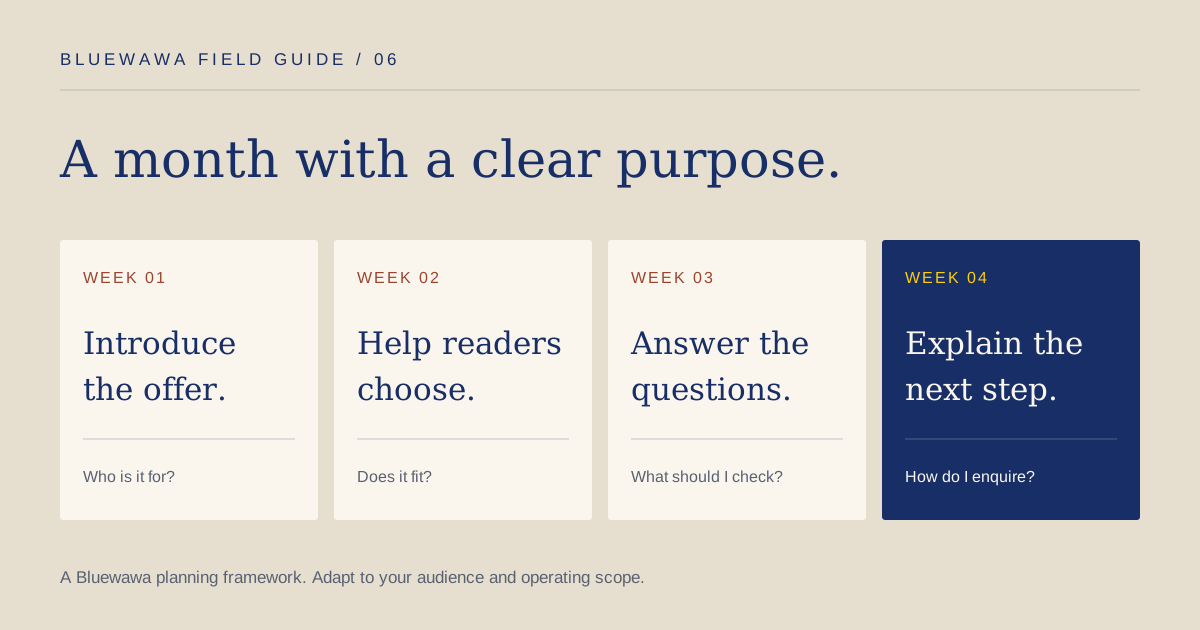
For a small first content set, assign one job to each piece: introduce the offer, help readers evaluate it, answer practical questions, and explain the next step. These jobs can become separate articles or a smaller number of well-structured pieces if resources are limited.
| Production week | Proposed piece | Reader question | Material to prepare | Intended next step |
|---|---|---|---|---|
| Week 1 | A clear introduction to the stay | Is this the kind of break I want? | Accurate brand story, location and approved imagery | Read the planning guide |
| Week 2 | Planning a two-day coastal break | How could this fit into my trip? | A feasible itinerary and verified access information | Compare the relevant stay options |
| Week 3 | Room and travel questions answered | What should I check before enquiring? | Confirmed room details and practical answers | Prepare dates and guest numbers |
| Week 4 | How to ask about a stay | What happens after I contact the team? | A tested contact route and agreed response process | Send an availability enquiry |
The guesthouse does not exist, so none of these pieces is ready for real publication. For a product brand, replace the itinerary with a use-case guide and the room questions with a product comparison. Keep the sequence tied to the customer's decision.
Use specific titles instead of numbering the articles “Brand update 1” through “Brand update 4.” A reader should understand the purpose without knowing your editorial schedule.
Add the information a production calendar actually needs
Alongside the topic and target release date, maintain a small working record for each article:
- Audience and question: the person and decision the article serves.
- Draft owner: who writes the Chinese copy and maintains the current version.
- Evidence owner: who verifies product details, conditions and factual claims.
- Assets: approved images, captions, credits and editable source material.
- Review notes: an English explanation of the angle and essential Chinese wording.
- Destination: where the main link or menu route goes and who tests it.
- Status: planned, drafting, in review, approved, scheduled or published.
- Maintenance trigger: what change would require a correction or update.
Do not schedule a post as ready while its central fact is still awaiting confirmation. Move the target date or choose a piece that can be completed accurately. A calendar should make dependencies visible, not conceal them behind a publishing target.
Build review time into the plan
Agree the review sequence with the global and Chinese-language teams. A practical sequence is an angle outline, a Chinese draft with English review notes, a factual and destination check, and a final mobile proof.
Use one person to consolidate feedback at each stage. Ask reviewers to distinguish a factual issue from a tone preference. If a late change alters the offer or customer action, check the links, menu references and response prompts as well as the sentence itself.
Allow time for missing assets and time-zone differences. The right production pace is the one your owners can sustain with accurate information and a working response process. There is no universal article count established by this sample calendar.
Make each article useful on its own
Do not require the reader to have seen last week's post. Open with the question being answered, explain enough context to understand the offer, and give one primary next step. Add a related article only when it helps the decision.
For the concept's room-question article, a useful structure would be:
- Who the guide is for and which room questions it answers.
- A comparison using verified room descriptions and images.
- Practical conditions that affect the choice.
- What information to include when asking about dates.
- A working route to the person who can respond.
Preview the actual article in the relevant mobile environment. Check heading length, image captions, text size and destinations. A link that opens in a desktop browser still needs verification in the intended WeChat journey and account context.
If the starting material is an English campaign, the content localization walkthrough offers an example of separating brand meaning from literal wording. Adapt that editorial method to a WeChat article's purpose and format.
Prepare the response before publishing the invitation
The fourth piece in the sample month explains the contact process. Write it only after agreeing who receives enquiries, what information they need and what they can promise in reply.
A request about dates should be described as an enquiry until availability and the reservation are confirmed. Give the customer a realistic explanation of what follows. If the team cannot maintain a response commitment, revise the process before placing it in the article.
Keep a short response guide for recurring questions. Assign responsibility for checking it when room information, service details or contact destinations change. This makes editorial maintenance part of the operating routine.
Use the month-end review to choose the next month
Record the available observations consistently rather than comparing mismatched screenshots. A simple review sheet can contain the article link, content job, publication date, available reading or engagement figures, recurring questions, known-source enquiries and one proposed change.
Separate content activity from business outcomes. A read is not an enquiry, and an enquiry is not a confirmed purchase. If attribution is incomplete, describe what the team knows and leave the rest unassigned.
Choose the next topics from unresolved customer questions and factual gaps. You may need to improve the existing room guide before writing another introduction. The first month's value is a useful content base and a repeatable editorial process, not a claim that four articles will produce a particular result.
If the brand also needs a discovery programme before people reach WeChat, revisit the platform comparison and the Rednote keyword research guide to assign each channel a clear job.
Your next step
Plan a month your team can deliver.
We can help turn approved brand information into Chinese articles, an editorial schedule and a clear customer follow-up journey.