Rednote / A Bluewawa field guide
Rednote Keyword Research: From Search Terms to Content Ideas
Turn a broad product category into useful Chinese content questions. Use a research worksheet to separate observed evidence from ideas that still need testing.
In this guide
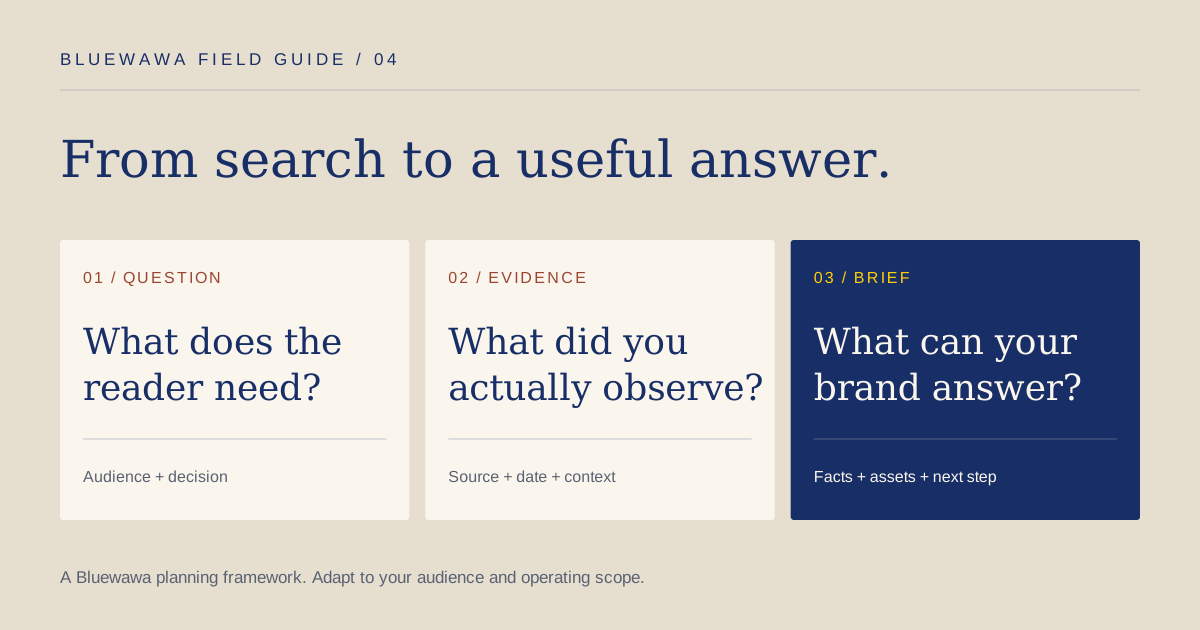
An overseas brand may know its category in English but still lack the Chinese vocabulary needed to plan useful Rednote content. Translating the product name is a starting point. The next task is understanding the situation in which someone would consider it, compare alternatives or ask for practical details.
This guide explains Bluewawa's proposed research workflow. The Chinese phrases below are illustrative seed ideas for a fictional coastal guesthouse, not live search findings, measured search volumes or proven ranking opportunities. Research in the actual market should decide which ones deserve a brief.
Start with a decision your brand can help answer
Write one audience-and-task statement before opening a keyword sheet. For our concept, it is: “A Chinese-speaking traveller is considering a short coastal break and needs to decide whether this stay suits the trip.”
That statement suggests several questions: where to go, how much time to allow, what the rooms offer and how to ask about availability. Each question requires different evidence. A destination guide cannot replace accurate room information, and a beautiful cover cannot answer a transport question on its own.
Agree the business scope alongside the audience scope. Record the actual destination, service area, suitable customers and information the team can verify. This keeps attractive but irrelevant terms out of the plan.
Build Chinese seed phrases around different intentions
Ask a native Chinese editor to develop candidate phrases from the customer task. Include category language, use cases, decision criteria and known brand-name variants. Preserve the English explanation so the global team can review the meaning.
| Illustrative seed phrase | Meaning for the reviewer | Possible reader task | Evidence needed before using it |
|---|---|---|---|
| 海边民宿 | Coastal guesthouse | Explore a type of stay | The offer actually fits this category |
| 两天一夜海边游 | Two-day, one-night coastal trip | Plan a short itinerary | A feasible trip for the intended audience |
| 海景房怎么选 | How to choose a sea-view room | Compare room options | Accurate room photographs and view descriptions |
| 海边民宿交通 | Getting to a coastal guesthouse | Check practical access | Current routes and property location |
These phrases belong to different content jobs. Do not combine them into one oversized title. Add destination names only when the property and audience make them relevant. Mark unclear translations for review rather than treating a dictionary result as customer language.
Collect observations with enough context to revisit them
Manually review the relevant in-app search experience and available account tools. Where suggestions or related phrases are shown, record what you observed. Read a manageable sample of relevant notes and questions to understand the information being offered and the gaps that remain.
Use a worksheet with these fields:
| Field | What to record |
|---|---|
| Phrase and English meaning | The exact term and the intended interpretation |
| Source | Search suggestion, note, customer question or account report |
| Observation date and context | Date, account context and any relevant filters |
| Reader question | What the person appears to need next |
| Evidence reference | A link, permitted screenshot or internal reference |
| Content implication | What your team could answer accurately |
| Confidence and next check | Observed wording, tentative interpretation or untested idea |
Treat a search observation as a snapshot. A visible suggestion does not give you a verified monthly search volume. A popular note does not establish why it performed well, and its engagement is not a measure of demand for your particular offer.
If paid search is part of the project, check the tools and definitions available in the official Rednote advertising help centre. Keep any advertising estimates separate from organic observations, including their source, date and scope. This workflow does not assume that every account has the same reporting access.
Group phrases into briefs, then choose a small first set
Cluster terms by the decision they support, rather than by a shared word alone. “Room view” and “distance from the coast” may both mention the sea but call for different assets and answers.
For each candidate cluster, ask three questions: Is it relevant to the customer we serve? Can we provide a useful answer with verified information? Can the reader take a sensible next step after reading? A cluster with missing facts may belong in the research backlog, even if the topic looks appealing.
For the guesthouse concept, a room-comparison brief might be:
- Reader question: What should I check before choosing a sea-view room?
- Content angle: Explain view type, room position and the information to request.
- Proposed working title: 海景房怎么选?先看这三个细节 — “Choosing a sea-view room? Check these three details first.”
- Required assets: Accurate images and confirmed descriptions of the actual room categories.
- Next step: Use an approved account contact route to ask which options fit the intended dates.
- Publication condition: Hold the property-specific draft until the room facts and contact route are verified.
The title is an editorial proposal, not a tested result. Our Rednote content localization walkthrough shows how to carry a brief into the cover and Chinese body copy.
Use the terms where they clarify the content
Choose wording that helps a reader identify the subject. Review the title, cover and opening together: do they promise the same useful answer? Explain related concepts in the body where they belong. Use relevant platform topic options when appropriate for the actual post and account.
Avoid a fixed keyword-density target or an arbitrary list of repeated hashtags. This guide does not establish an algorithmic advantage for those tactics. An editor should be able to read the note aloud without it sounding like a research spreadsheet.
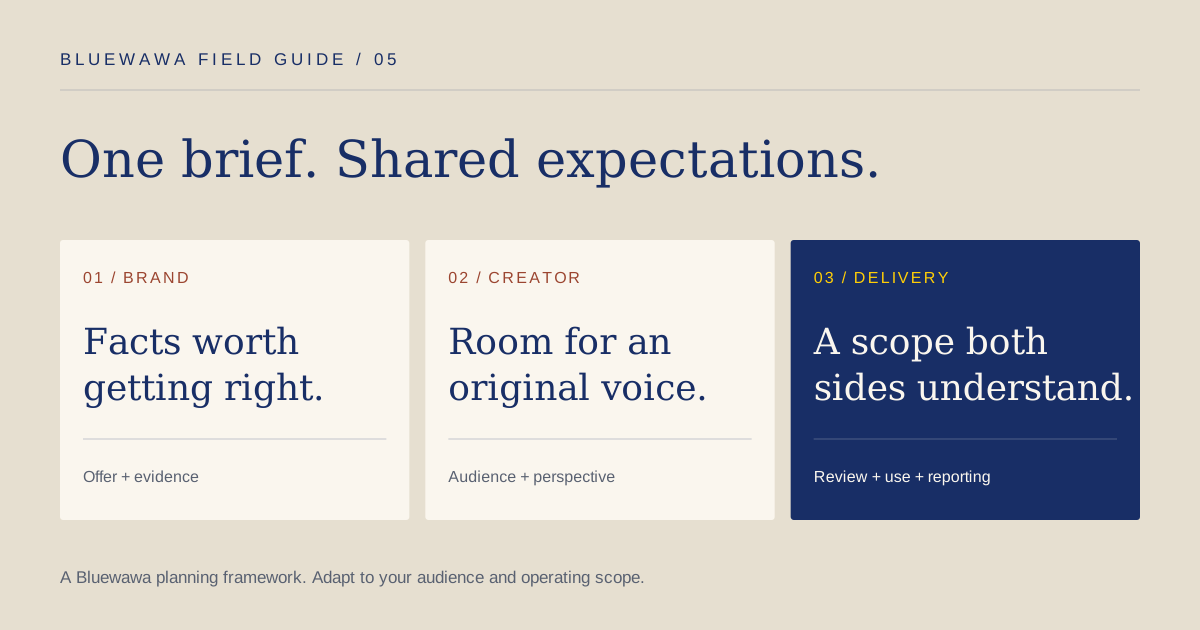
If a creator will produce the content, share the question and factual requirements while leaving room for their own language. The Rednote creator brief template explains how to separate essential information from creative choices.
Review what the content actually helped people do
Before publishing, record the note identifier, intended question and available reporting fields. At review time, compare the observations you can obtain consistently: relevant questions, saves, available discovery data and enquiries with a known source. Label missing data as unavailable.
Do not interpret one strong post as proof that a keyword caused the outcome. Imagery, timing, distribution and the offer itself may also differ. A useful first review produces a concrete editorial decision: answer a recurring question, improve an unclear comparison, or stop pursuing a topic that does not fit the business.
The handover should contain the research sheet, a short set of prioritized briefs, a list of missing facts and a review date. That gives the team something it can produce and learn from. If platform selection is still unresolved, begin with Rednote vs WeChat before expanding the research scope.
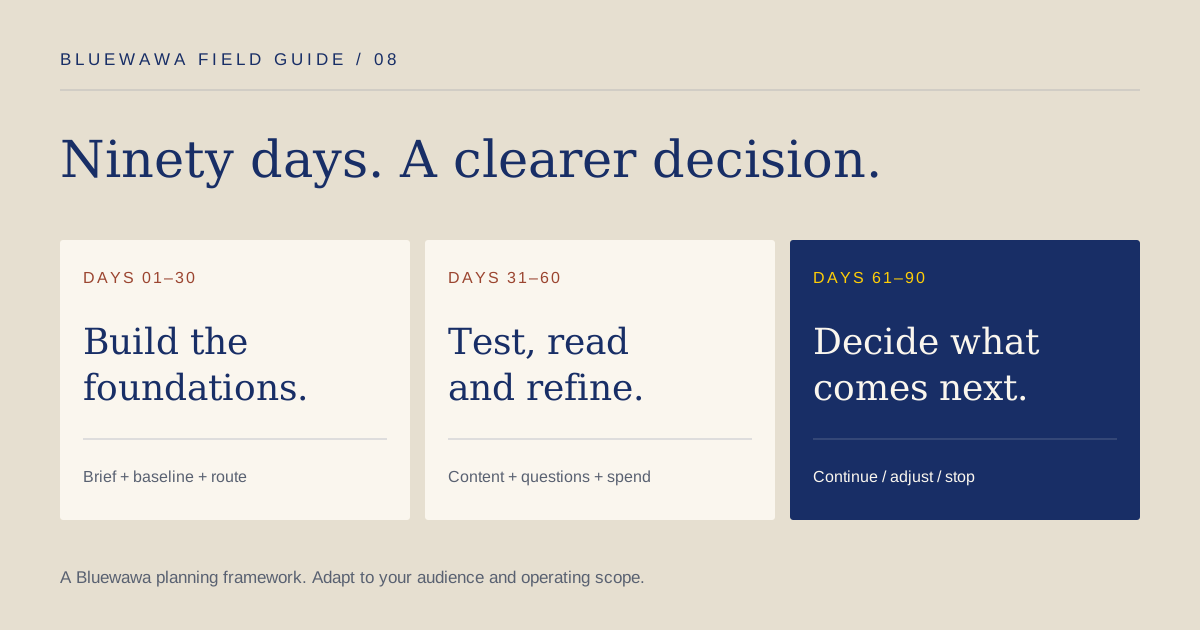
To place the research inside a bounded first engagement, use the 90-day Rednote pilot framework. It connects briefs to production, review points and an investment decision.
Your next step
Build your first Chinese content map.
Bring your category, audience and approved product information. We can scope research and localized content around the decisions your customers need to make.