China market planning / A Bluewawa field guide
How to Evaluate a China Social Media Agency
Assess what an agency can demonstrate, what its proposal includes and how your team will retain control. Use a practical worksheet for Rednote and WeChat projects.
In this guide
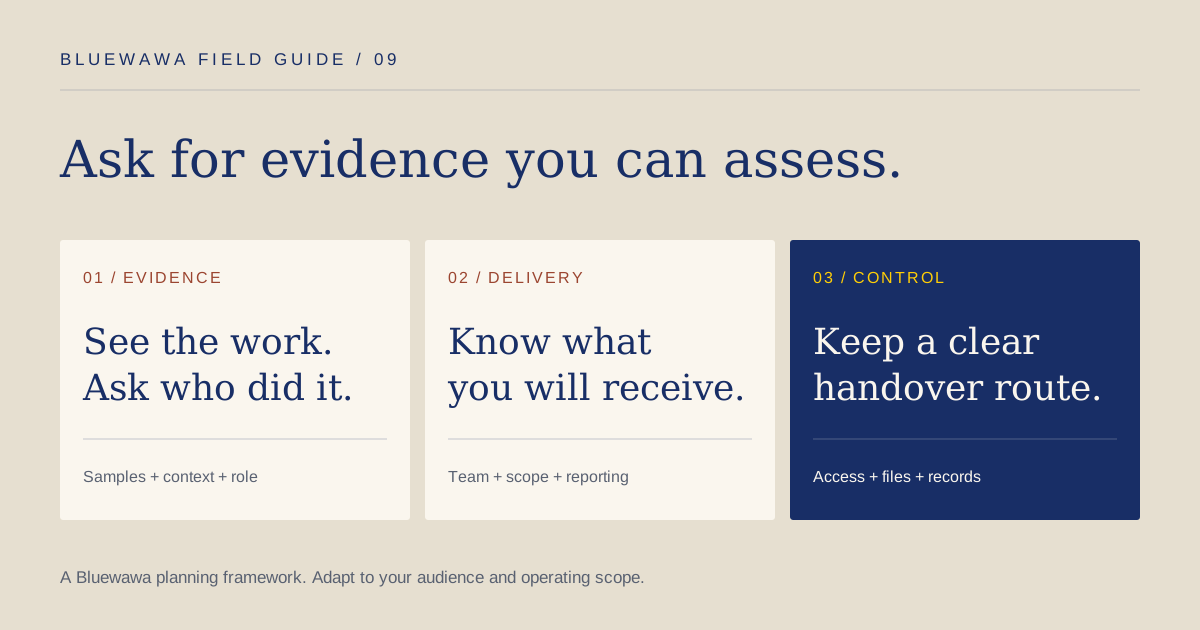
An overseas brand evaluating a China social media agency has two linked questions: can this team do useful work for our audience, and can we manage the engagement with enough clarity to make good decisions?
This guide is Bluewawa's proposed buyer checklist for Rednote and WeChat projects. Bluewawa also provides these services, so apply the same questions to us. It is not an independent agency ranking, and it does not assume that a large team or a long client list automatically fits your project.
Define the job before comparing the agencies
Give each candidate a short version of the same brief: audience, offer, intended customer action, existing accounts, available assets, internal review capacity and budget constraints. Ask what they would include first and what they would defer.
A proposal for content localization cannot be compared directly with one that also includes creator payments, advertising and customer-response operations. Use our Rednote budget guide to separate those costs before assessing the total.
For WeChat, be precise about the product and journey under discussion. Tencent lists Official Accounts, Channels and Mini Programs as distinct parts of the Weixin and WeChat ecosystem. An agency saying it “does WeChat” has not yet explained which of those it would use, what it would build or who would maintain it.
Ask what the work sample actually proves
Request a relevant example and ask the agency to explain the brief, its own contribution, the constraints and the delivered work. For Chinese content, ask for an English explanation of the creative decisions so your team can review more than the appearance.
| Evidence presented | Useful follow-up question |
|---|---|
| A published post | Which parts did your team research, write, design or manage? |
| A campaign chart | What dates, spend and metric definitions are represented? |
| A client logo | What was the actual engagement and what may you share about it? |
| A reporting sample | Which decisions did this report help the client make? |
| A concept project | Which skills does it demonstrate, and which outcomes remain untested? |
Respect client confidentiality. A redacted report or an anonymized explanation may be appropriate. If outcomes cannot be substantiated, treat the sample as evidence of the visible work rather than inventing confidence in results you cannot assess.
A small project can still demonstrate careful research, useful copy and reliable delivery. Our homepage samples are explicitly labelled concepts; they illustrate a process and creative output, not client results. Ask any supplier to make the same distinction clear.
Identify the people who will do and approve the work
Ask who researches the audience, writes Chinese copy, reviews facts, manages creators and responds to customers. Clarify which responsibilities sit with the brand and which sit with the agency. Find out whether specialists are employees, freelancers or separate suppliers and who coordinates their work.
Request a sample bilingual review process. A useful review includes the Chinese draft, its intended meaning, key factual references and a single place for consolidated feedback. It should explain who can approve publication and what happens when feedback is late.
For a content-led engagement, our localization walkthrough provides one example of the material a reviewer can inspect. For operations, the WeChat launch checklist shows why access, destinations and response ownership need named owners as well.
Turn the proposal into inspectable deliverables
Ask the supplier to describe quantities, formats, inputs, milestones and acceptance criteria. “Monthly strategy” or “community growth” is not sufficient on its own to show what your team will receive.
For each line, distinguish a deliverable from an intended outcome. An agreed content set can be checked for completion. Increased demand depends on more than whether the files were delivered, and should be evaluated with the available evidence.
Check revision limits, production dependencies, response coverage and the process for additional work. Identify which third-party costs are included and who must approve new spending. A workable proposal should also say what happens if the brand cannot supply the facts or assets needed for publication.
Read a sample report before agreeing the reporting scope
Ask for a redacted report or a clearly labelled demonstration using sample data. Look for the connection between the original objective, work delivered, spend, available platform activity, relevant enquiries and the next decision.
A useful report explains metric definitions and limitations. It separates paid and organic activity where the data permits, distinguishes enquiries from sales, and avoids claiming full attribution when the customer journey cannot be traced.
Ask the presenter to explain one result that would cause them to change the plan. If every possible outcome leads to the same recommendation to spend more, the report is not giving the buyer a useful decision process.
Confirm account control and the handover route
Write down the account operator, administrator, recovery route and access responsibilities before work begins. Verify what the actual platform setup permits rather than assuming that every account or asset can be transferred freely at the end.
Keep the appropriate brand representatives involved in administration and recovery. Agree how access will be granted to the working team, how it will be reviewed and how it will be removed when the engagement ends. Avoid making a shared password the whole access plan.
Clarify the handling of editable files, approved copy, creator usage permissions, analytics exports, enquiry records and remaining media balances. An account handover does not automatically settle the right to reuse every creator asset; record the agreed scope for each item.
Ask the agency to describe the handover process in the proposal, including what can be delivered, who receives it and any dependencies. This is an operational checklist; account terms and the specific agreement still govern what is possible.
Use an evidence worksheet instead of scoring the pitch
For each candidate, mark each row supported, partly supported or unresolved, and attach a reference or follow-up question. Agree which requirements are essential before reviewing the pitches. An attractive total score should not conceal an unresolved requirement your business cannot operate without.
| Evaluation area | Evidence to collect | What a useful answer contains |
|---|---|---|
| Audience and platform fit | Response to your common brief | A specific audience, customer task and reason for the proposed scope |
| Relevant work | Explained sample and contribution | A clear distinction between delivery evidence, concepts and verified results |
| Delivery team | Responsibility map | Named roles, review owner and backup arrangements |
| Commercial scope | Itemized proposal | Quantities, exclusions, third-party costs and change approvals |
| Reporting | Sample report and definitions | Available evidence, limitations and decisions it supports |
| Account control | Access and recovery plan | Agreed operator, administrator and ongoing brand involvement |
| Exit and continuity | Handover checklist | Files, permissions, records, balances and outstanding work |
Use the worksheet to request missing evidence consistently. Keep notes on why an answer matters to your project rather than rewarding the supplier who uses the most terminology.
Start with a bounded engagement when uncertainty remains
A paid, defined first scope can give both sides better information about collaboration than an open-ended retainer. Agree what it will test, the deliverables, responsibilities and final decision. Do not ask for a complete unpaid strategy as a substitute for evaluating existing evidence.
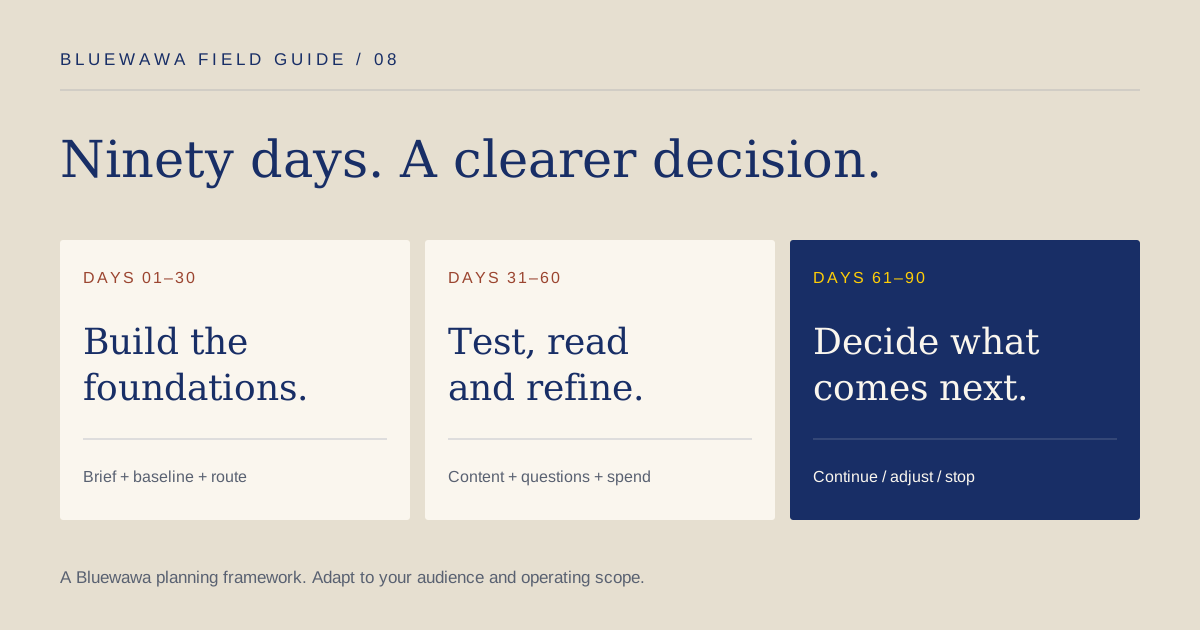
The 90-day Rednote pilot framework shows how to structure such an engagement with review points. A shorter content assignment may be more appropriate if the immediate uncertainty is writing and production quality.
Select the partner whose evidence and operating approach fit the job you have defined. Keep the evaluation sheet with the agreed scope so the first review can compare the actual engagement with the reasons you chose it.
Your next step
Use the same questions when you talk to us.
Bring your objectives and evaluation criteria. We can explain our proposed scope, show labelled work samples and clarify responsibilities before an engagement.