Rednote / A Bluewawa field guide
Rednote Marketing Costs: What Goes Into the Budget?
Separate agency work, production, creator fees and media spend before comparing proposals. Build a scoped budget with explicit assumptions and exclusions.
In this guide
“How much does Rednote marketing cost?” becomes answerable when the scope is clear. Six localized image notes based on approved assets are a different purchase from original video production, creator visits and an advertising programme. A monthly fee can describe either a narrow service or part of a much larger budget.
This guide gives overseas brand teams a way to build and compare that budget. Bluewawa does not publish a verified market price range here. Actual costs require a scoped proposal and, where relevant, current third-party quotes.
Start with five cost categories
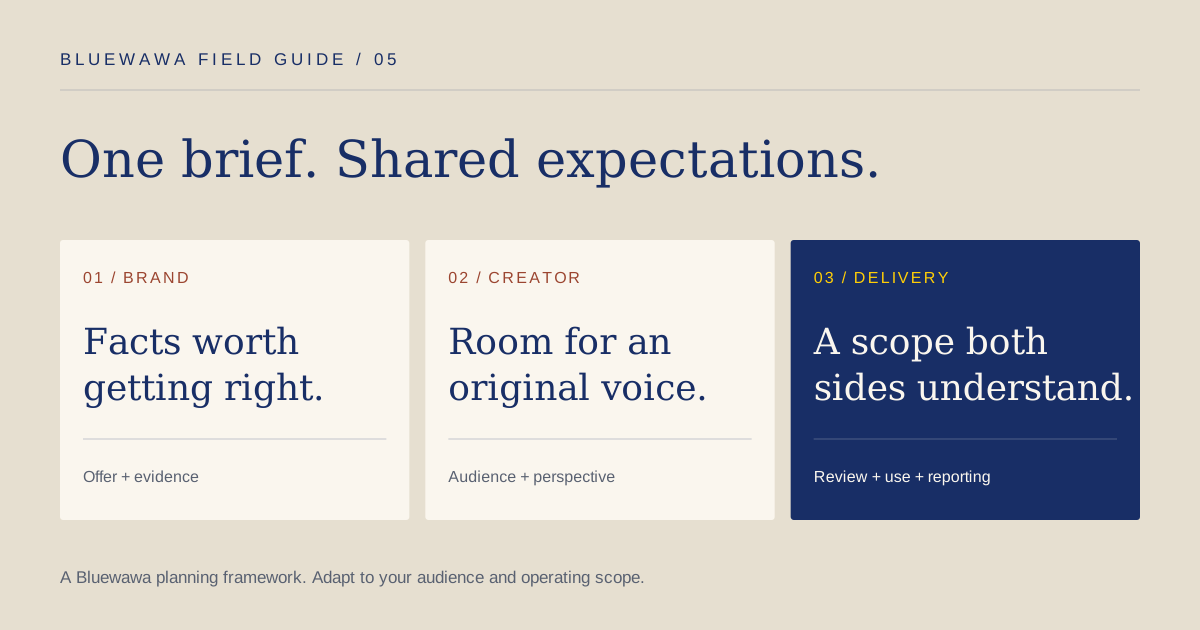
Ask suppliers to separate the work they perform from the money they administer. “Content management included” should be expanded into deliverables, responsibilities and limits.
| Budget category | What it can cover | What to clarify in a proposal |
|---|---|---|
| Initial setup and planning | Audience research, editorial direction, account planning and a measurement baseline | One-time tasks, required inputs and whether registration support is included |
| Ongoing service work | Editorial coordination, publishing support, response handling and reporting | Who does each task, coverage hours, review frequency and limits |
| Content production | Chinese copy, design, photography, video and adaptations | Number and format of pieces, source assets, revision rounds and editable files |
| Creator collaborations | Creator deliverables and coordination | Creator payments, agency coordination, product supply, travel and agreed reuse |
| Advertising | Paid distribution and campaign management | Media paid to the platform, management fees, reporting and spend authorization |
Rednote provides an official advertising platform and the Pugongying creator collaboration platform. Their separate workflows are a useful reminder to identify who is receiving each payment. Their existence does not establish a standard price or make a creator fee interchangeable with media spend.
Use a simple working equation: planned cost = setup + service fees + production + creator commitments + media + separately identified expenses and reserve. If production is already included in a retainer, record that inclusion instead of counting it twice.
Define the units before asking for a price
For content, define the format and required inputs. A “post” could mean writing copy for supplied images, designing a photo note, filming on location or editing several video versions. The same quantity can therefore represent very different work.
For operations, distinguish publishing from responding. Ask whether the team monitors messages, in what language, during which hours and with what escalation process. For reporting, request a sample structure and the questions it answers, not simply a promise of a monthly PDF.
For creators, record the deliverable and any requested usage separately. The creator brief template helps define these items before requesting proposals. A smaller audience does not by itself tell you the production effort, audience fit or commercial scope.
Work through a hypothetical three-month budget
The following example assumes a fictional brand adapting existing assets into six owned-account image notes, with two small creator collaborations and a capped paid-distribution test over three months. It assumes an operable account, approved product facts and a brand team available for reviews. It includes no new location shoot or video production.
Every dollar amount below is invented solely to illustrate a budget worksheet. These are neither available Bluewawa rates nor verified supplier prices. The USD 6,000 subtotal is not an estimate of what this scope will cost in the market. Replace each allowance with an accepted quote before committing funds.
| Line item | Assumed allowance, USD | What the worksheet must track |
|---|---|---|
| One-time research and planning | 600 | Deliverables and completion milestone |
| Three months of coordination and reporting | 2,400 | Included service tasks and monthly fee |
| Six owned-account notes from existing assets | 1,200 | Production scope, formats and revisions |
| Two creator content allowances | 600 | Separate quotes and agreed deliverables |
| Paid media test | 900 | Platform spend cap; management included in the assumed service line |
| Uncommitted reserve | 300 | Brand approval required before use |
| Illustrative working subtotal | 6,000 | 5,700 allocated plus 300 held in reserve |
Taxes, currency conversion, payment charges, product shipping, creator travel, additional usage permissions and account-related charges are not priced in this worksheet. Confirm which apply and add them before treating the total as a funding requirement. A reserve does not silently cover every missing cost.
The exercise exposes decisions. If the owned-content production quote is USD 1,800 instead of the assumed USD 1,200, the worksheet rises to USD 6,600 before the unpriced items. Holding a USD 6,000 ceiling requires an explicit scope change or savings elsewhere; it does not justify quietly reducing a creator's agreed deliverable or spending beyond the cap.
Compare proposals on the same basis
Give shortlisted suppliers the same brief and ask them to identify deviations. A lower total may be suitable, but first establish whether it buys the same work.
| Comparison question | Evidence to request |
|---|---|
| What will we receive? | Deliverable quantities, formats and acceptance criteria |
| What must our team supply? | Asset list, factual inputs and review responsibilities |
| What is included in the monthly fee? | Task list, response coverage and revision limits |
| Which costs pass through to others? | Separate creator, media and other third-party lines |
| Is there a markup or management charge? | The calculation basis and where it appears |
| How are changes approved? | Written change process and spending authority |
| What happens to unused media funds? | Funding, reconciliation and refund or carry-forward arrangements |
| What do we retain when the project ends? | Agreed account access, deliverable files and reporting records |
An unanswered line is a follow-up question, not a saving. For a broader supplier review, use the China social media agency evaluation guide.
Reduce scope without losing the purpose of the test
If the budget is constrained, reduce the number of audiences, formats or creator experiments before removing factual review and basic measurement. Existing approved assets can reduce production needs when they accurately support the proposed content.
One option is to begin with owned content and a tested enquiry process, then price creator or advertising work after reviewing the first results. This changes what the pilot can tell you: an owned-content test cannot answer every question about paid distribution or creator performance.
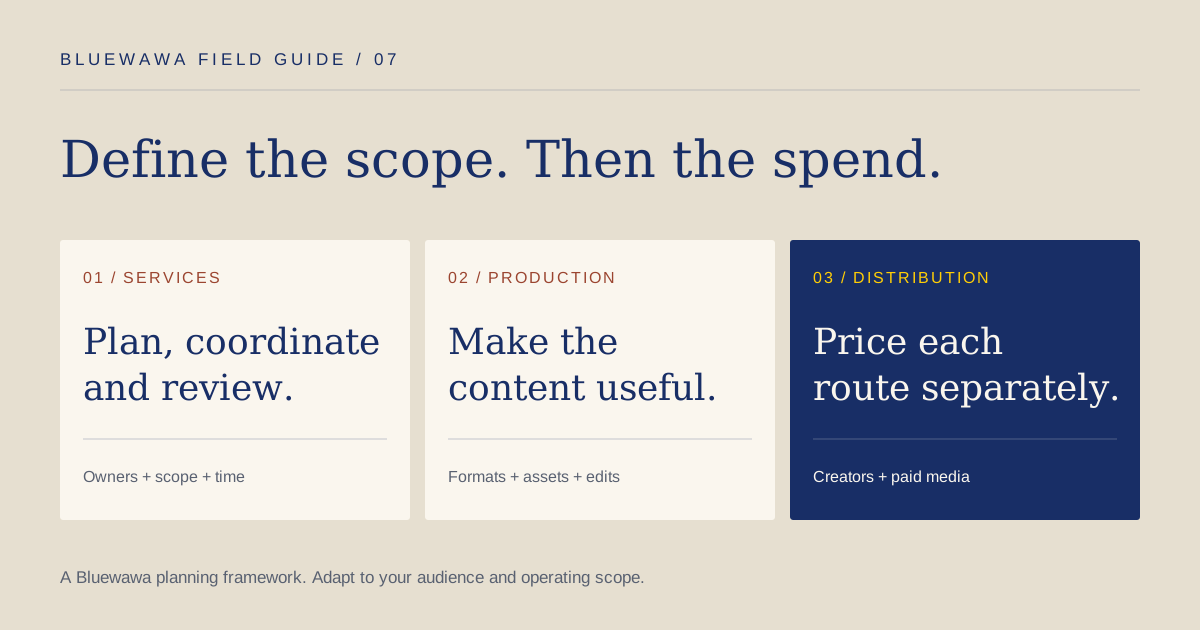
Avoid dividing a small allowance across many unrelated ideas. The 90-day Rednote pilot guide shows how to connect each phase to a decision so that the budget buys a coherent test.
Ask for the inputs that make the final quote reliable
Prepare the intended audience, product or service, account status, existing assets, desired formats, review contacts and spending constraints. Identify whether the goal is useful enquiries, product consideration or another measurable action the team can actually observe.
Request a proposal that states the period, currency, quantities, exclusions, payment milestones and decision points. Keep budget reporting alongside delivery reporting: what was approved, what was committed, what was actually spent and what remains available.
A useful estimate makes those boundaries visible. It should help you decide what to start, what to defer and what evidence would justify the next investment.
Your next step
Ask for a budget you can assess line by line.
Share your audience, available assets, intended scope and budget constraints. We can discuss the work required and identify what needs a separate quote.